For Healthcare Facilities
Designed for
easier assisted dressing.
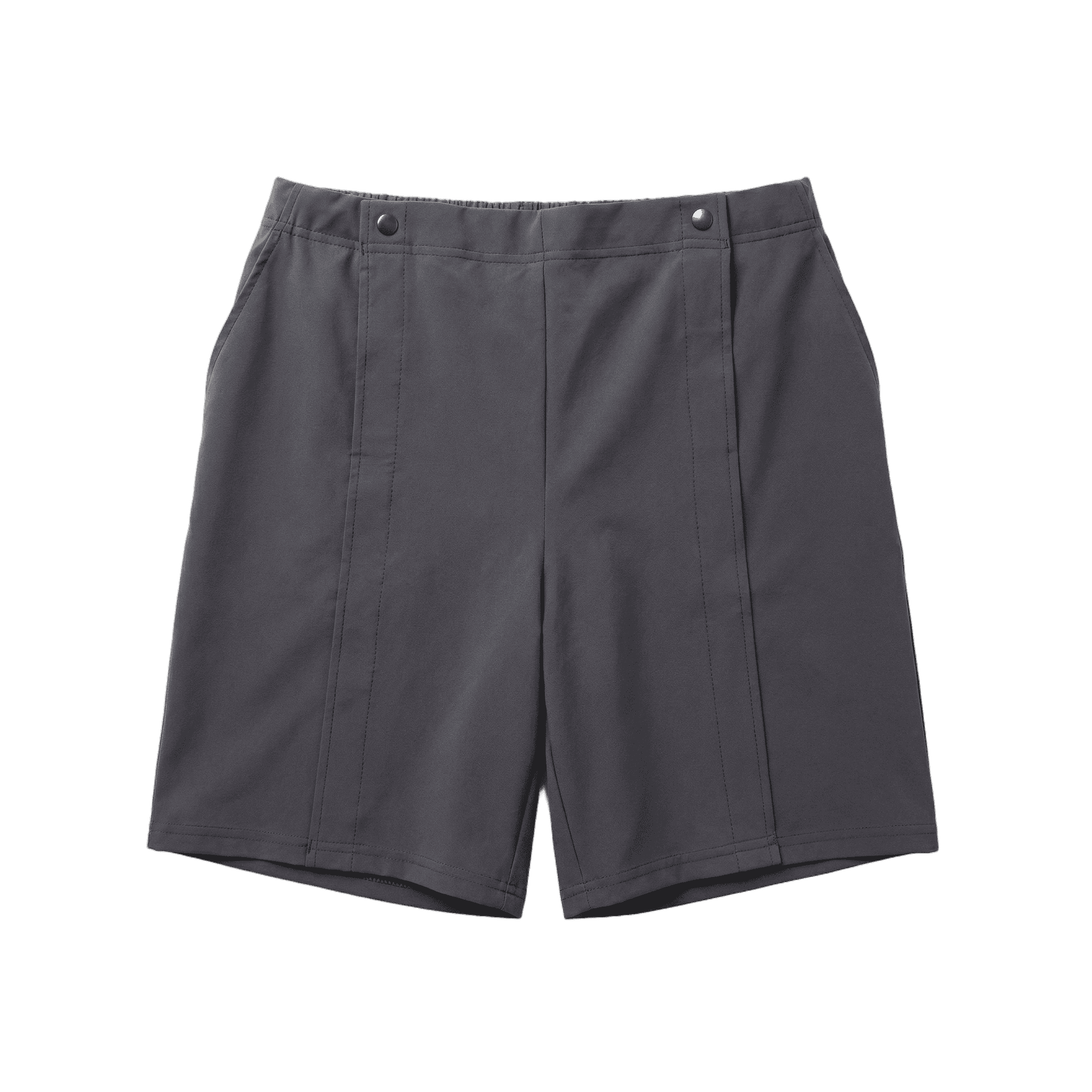
Built around the same log-roll motion used to place a sling: no-transfer-equipment dressing that works alongside your facility's own assist-level policies. Daily Dons reduces the physical demands of morning care and frees your team back to the floor.
- Designed by a Doctor of Physical Therapy
- Developed inside a skilled nursing facility
- Log-roll dressing technique
- No transfer equipment required
Facility ROI Calculator
Your facility's numbers.
Enter your facility size. Every assumption behind the result is conservative, editable, and shown with its downside.
You pay per pair, not per year — the per-pair price is locked for the contract. Your facility orders a fresh set (3 pairs per resident) each year.
Facility Profile
Facility size
Use whichever number is easier to look up.
Total-assist residents
Residents who currently need 2-person dressing assist. Don't include independent dressers.
Loaded CNA hourly wage
Wage including benefits and payroll taxes. BLS May 2024 median is $19.00/hr base ≈ $24–25 loaded; we default to $20 to stay conservative.
Minutes per dressing episode (current)
Minutes to dress one total-assist resident today, including the brief change and repositioning in the same episode
Current staff needed per episode
How many caregivers it takes today
Estimated time with Daily Dons
Conservative default: 1 minute less than current. Edit to match your facility's expectation.
Estimated staff with Daily Dons
Edit to match what your facility expects; many start at 1.
Heavy dressings per resident per day
Default 2: morning (into day clothes) + evening (back into a gown). Both require 2-person assist. Lower to 1 if your facility doesn't change residents into a gown at night.
Labor capture rate
% of freed CNA minutes that convert to budget (OT reduction, avoided agency, avoided future hire). Default 25% is conservative, the rest is operational relief, not dollar savings.
Pairs per resident per year
Default 3: 1 in use, 1 in laundry, 1 in the drawer (commercial laundry turnaround is 2–3 days). The full deployment is re-ordered annually for fresh inventory.
One-time deployment cost
Defaults to $0: CNA training, sizing, laundry SOP, and DON rollout support are included in the program. Raise this to model your facility's own internal rollout time.
Modeled estimate, not a guarantee — verify against your own operational data before purchasing.
Your 3-year contract: modeled
You pay
120 pairs × $50/pair, ordered each year
$6,000/yr
$18,000 total, 3 yr
Net savings, 3 yr
If 1-person dressing is approved
$76,900
4.3× ROI
If the 2-person rule stays
-$3,400
-0.2× ROI
Pays for itself if dressing saves ~2.5 staff-min per episode. The pilot measures which track is yours.
Savings over time
Daily Dons pays for itself around month 7. By year 3, you've kept $76,900 in your budget that would've gone to extra labor.
Every number below recomputes live from your inputs.
How much you'll need
40 total-assist residents × 3 pairs each, ordered every year = 120 pairs / year.
Across 3 years, that's 360 pairs total, you pick the size mix each year. We re-order the full deployment annually so the floor always runs on fresh inventory.
What it costs
The price is per pair, not per year: $50 buys one pair, once. Because you order 120 pairs each year, garments run $6,000/yr — over 3 years: 360 pairs × $50/pair = $18,000.
Onboarding (CNA training, sizing, laundry SOP, DON rollout): included in the program at no separate charge. Raise the deployment cost in the advanced reveal to model your own internal rollout time.
Total program cost over 3 years: $18,000.
Time freed in the workflow
Today, each dressing takes 12 min × 2 staff = 24 staff-minutes. With Daily Dons: 11 min × 1 staff = 11 staff-minutes.
That frees 13 staff-minutes per dressing. Across 40 total-assist residents getting 2 heavy dressingsa day, that's 17.3 hours/day = 6,327 hours/year of caregiver capacity returned to the floor.
How much actually hits the budget
Freed minutes are real operationalrelief, but CNAs are on fixed shifts, so they don't automatically convert to dollar savings. Only a portion does: OT reduction, avoided agency-CNA, avoided future hires.
Gross time-value at $20.00/hr: $126,533/yr.
Apply a 25% labor capture rate (your slider, conservative default 25%): $31,633/yr actually hits the budget.
Your 3-year picture
Realized labor savings, 3 years: $94,900 (constant wages, they typically rise 3–4%/yr in reality).
Minus total program cost of $18,000 (garments + one-time deployment): $76,900 net.
Net ROI: 4.3× net dollars returned per $1 spent on the program (after recouping the cost).
Downside: what if you can't move to 1-person dressing?
The biggest assumption above is that your facility can convert dressing from 2-person to 1-person. If that's blocked by policy (fall risk, witness rule, survey expectations), the ONLY savings is the 1 min/episode time delta, still applied to 2 staff.
That track = $4,867/yr realized × 3 yr = $14,600 − $18,000 program cost = -$3,400 net (-0.2× net ROI).
If this is negative for your facility, the labor-savings case doesn't close, but the operational relief (17.3hrs/day of caregiver capacity) is still real and has retention / quality-of-care value you'd evaluate separately.
Why this is the conservative case
- 2 heavy dressings per day, morning into day clothes and evening back into a gown. We don't add extra changes for post-toileting cleanup or therapy sessions, even though those happen too.
- 25% labor capture, we assume most freed CNA time is reabsorbed into other resident care, not stripped from payroll.
- Onboarding included, CNA training, sizing, and rollout support are part of the program, so the calculator runs with zero deployment cost by default. Raise it in the advanced reveal to model your own internal rollout time.
- Constant wages, no 3–4%/yr CNA wage inflation modeled.
- No injury-claim impact modeled (patient handling accounts for ~32% of workers'-comp claims in skilled nursing settings, and ADL-assist claims carry the highest median medical cost of any patient-handling task, JOEM 2020; this is general industry context, not a claim about Daily Dons' effect on injury rates).
- No turnover impact modeled (~$3k/replacement, PHI National).
- 1 minute of dressing-time savings only, a deliberately conservative founder estimate, not a measured outcome.
Where the defaults come from
- 3 pairs / resident / year, 1 in use, 1 in laundry, 1 in the drawer — commercial laundry turnaround runs 2–3 days. We re-order the full deployment annually because industrial laundering wears garments and resident census turns over.
- 2 heavy dressings / day, morning (into day clothes) and evening (back into a gown). Both require 2-person assist for total-assist residents. Lower to 1 if your facility skips the evening change.
- 12 min × 2 staff (current), Daily Dons Workflow Load Assessment baseline. Published observation studies put pure dressing at 4–9 minutes; our default is higher because it bundles the brief change and repositioning that happen in the same episode. Real-world time varies with assistance level, contractures, pain, ability to follow commands, and precautions.
- 11 min × 1 staff (with Daily Dons), 1 minute faster plus 1 caregiver freed. The 1-caregiver shift is the real product lever.
- 25% labor capture, share of freed minutes that typically convert to dollar savings on a fixed-shift staffing model.
- $0 onboarding, CNA training, sizing, and rollout support are included in the program. Raise this to model your facility's own internal rollout time.
- $20/hr loaded wage, deliberately below the realistic figure: BLS May 2024 CNA median is $19.00/hr base, roughly $24–25/hr loaded with benefits and payroll tax.
- 8 residents / Hoyer lift, middle of the typical SNF range (5–15).
Every default is editable above, use your facility's own numbers.
Modeled estimate based on your inputs, not a guarantee. Verify with your own operational data before any purchasing decision.
Start with a measured pilot · $1,999
12 residents, 36 pairs, DPT-led CNA training, and a 30-day time study run in your building with your staff. If your measured dressing time doesn't improve, we refund the pilot and take the inventory back. Every pilot is run personally by our founding clinician — 3 per quarter.
Computed from your inputs · No marketing multipliers
Facility Partnerships
Ready to bring Daily Dons
to your facility?
Volume pricing, clinical onboarding, and staff training support for SNFs, ALFs, and hospital systems.